
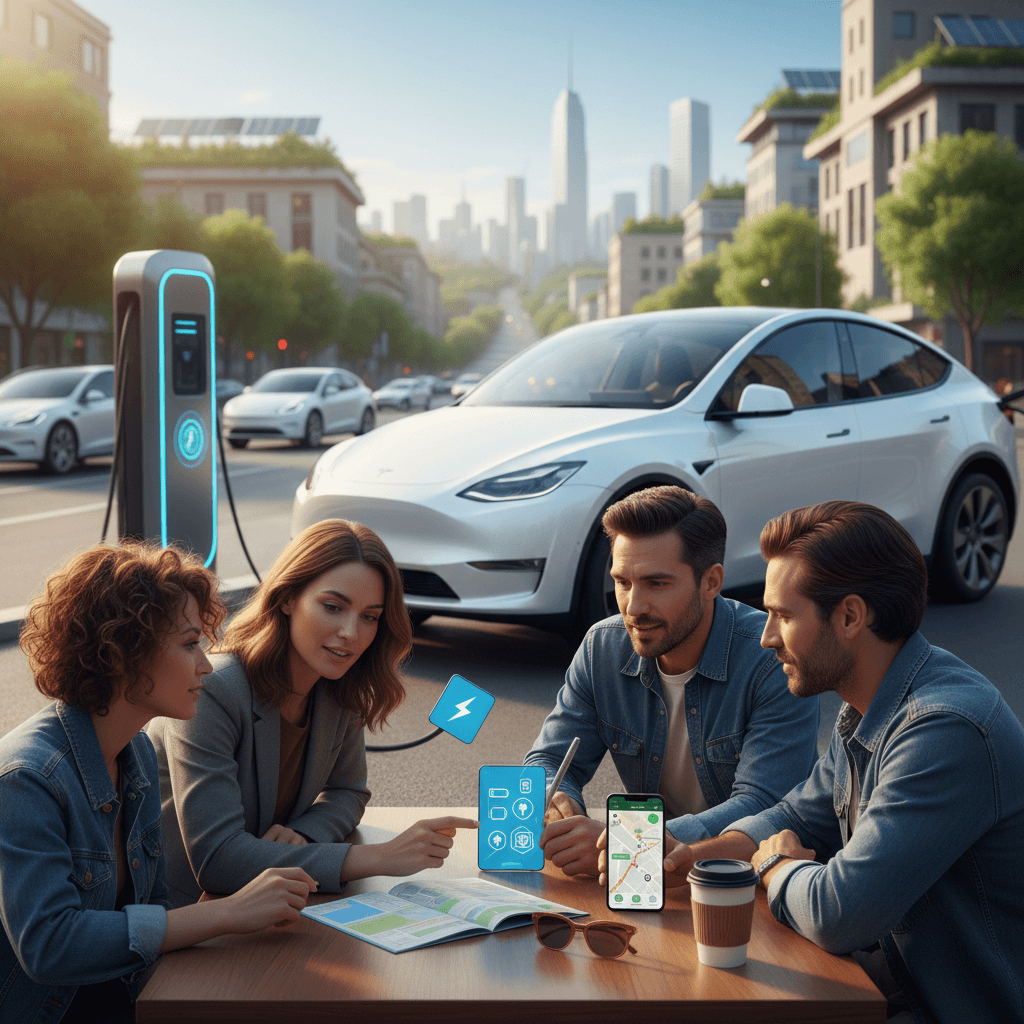
Below you will find clear explanations about range, charging, costs, paperwork, and useful habits that save time and money. Read through the sections that match your plans and pick a few tips to apply before you pick up the keys.
Why choose an EV rental now
Electric vehicles have matured from niche models to mainstream options. Many rental fleets include a range of sizes from small city cars to family SUVs and executive saloons. Benefits you can expect include lower per mile running costs when charging at lower rates, access to low emission zones that request a fee for petrol or diesel cars, and a quieter cabin that makes long motorway stints less tiring.
Think about the type of trip you will do. Urban trips with frequent stops can be a sweet spot because regenerative braking adds range. For long motorway journeys check the rapid charger coverage along the route and the car’s rapid charging capability before booking.
Understanding real range and what affects it
Manufacturers quote WLTP range figures that provide a baseline. Real world range varies because of driving style, weather, load, and terrain. A medium sized EV with a 60 kilowatt hour battery might show a WLTP figure near 250 miles. In colder weather and with sustained high speed driving expect that number to be lower.
Factors that cut range
- High speed driving increases energy use compared to town driving
- Cold temperatures reduce battery efficiency and increase use of heating
- Heavy loads or roof boxes increase aerodynamic drag
- Frequent rapid acceleration uses more energy than steady pace
Practical range planning tips
- Plan routes with an extra 15 to 25 percent margin on top of expected consumption
- Use route planning tools that model EV consumption and show chargers
- If possible pick a car with a higher WLTP figure than the minimum you need
Charging types and how long charging takes
Charging can happen at a private home, at a destination, or at public points. Charging is described by power in kilowatts. Slow home chargers often deliver about 3 to 7 kilowatts. Public AC chargers are commonly 7 to 22 kilowatts. Rapid DC chargers deliver 50 to 350 kilowatts for compatible cars.
Connector types matter. In the UK look for Type 2 and CCS connectors on most modern cars. Older models may use CHAdeMO. Tesla has its own connector on some models but many rental fleets provide Tesla cars with adapters or a Type 2 socket for destination charging.
How long will a charge take
- From a 7 kilowatt AC charger a typical 40 kilowatt hour battery will need 5 to 6 hours to go from 10 percent to 90 percent
- At a 50 kilowatt DC rapid charger the same battery could reach 80 percent in about 40 to 60 minutes
- At very high power 150 kilowatt chargers a large battery may hit 80 percent in 20 to 30 minutes if the car accepts that power
Most rapid charging times slow down above 80 percent state of charge. For practical stops aim for 20 to 80 percent to save time.
Costs to watch in the rental agreement
Beyond the headline rental price check several areas that affect total cost. Common items in rental terms include a security deposit, excess mileage charges, insurance excess, and fees for returning the car with low battery or needing cleaning. Ask the rental company how they charge for electricity if you return the vehicle with a low state of charge. Some providers include a set amount of charging credit. Other companies bill for charging at their quoted rates which can be higher than public prices.
Damage and paperwork rules for EVs are similar to conventional cars. However some points are EV specific. Confirm whether breakdown cover includes assistance when you run out of charge. Ask if the provider will cover recovery to a charger or if you are liable for the cost of recovery and any charging you need to continue your journey.
Choosing the right vehicle and options
Renting an EV is not just about range. Consider boot space, passenger comfort, ease of use for the charging socket, and whether the car has adaptive climate preconditioning. If you plan to tow check the vehicle’s towing allowance because many EVs have limited or no tow rating. Also check wheel size and tyres because different tyres affect range and ride quality.
- For city driving choose a compact model with easy visibility and tight turning circle
- For family trips consider a larger battery and more interior space
- For motorway travel pick a car with a high rapid charging acceptance rate
Apps and payment systems for charging
Public charging networks operate their own apps and cards. Some networks accept contactless bank payments. Others require a session to be started via app. When renting you may not have accounts set up with every network. There are two common approaches rental companies follow. Some supply a charging card and include a balance. Others expect drivers to use their own payment methods. Ask before you drive.
Many apps show realtime charger status and pricing. If you will use public chargers frequently create accounts in advance and add a payment method to avoid delays. When an app requests a driver profile photo or ID you can often set this up quickly but allow time when planning pick up.
Practical pickup and return checks
At pickup inspect the car with the attendant and note the battery state of charge. Photograph the dashboard and any existing bodywork marks. Test any charging cables in the boot. Make sure you have the adapter you need for certain public chargers or portable charging options if included with the rental.
When returning follow the rental policy. If a rental requires a minimum charge level follow that request. If you cannot reach a charger near the drop off location call the rental company and ask for guidance. Some firms have a policy to charge for low battery returns. Others may waive a fee with reasonable explanation.
Charging etiquette and safety tips
- When using a rapid charger avoid occupying the bay after the car is finished so other drivers can use it
- Only use the correct cable and connector that fits securely to avoid error messages
- When charging in wet weather check the socket cover seals properly and follow any on device instructions
Common mistakes to avoid
One common error is relying solely on WLTP numbers without checking rapid charger coverage. Another is not minding payment access for public networks. A third is underestimating the time for charging stops which can add significantly to journey time. Plan for a few short stops and one longer stop if your route is near the limit of the car’s typical range.
If you need a checklist for what to ask the rental company read EV Powered for a practical list that you can use when booking and at pickup. That resource highlights questions about charging credit, included cables, breakdown cover, and other EV specific points.
Renting an EV is an opportunity to try electric driving with limited commitment. Make a list of the most important items for your trip and confirm them with the rental provider before booking. With the right planning an electric rental can be convenient and cost effective.
Conclusion
Electric Vehicle Rental Must Know Information covers range planning, charging behaviour, costs in the rental agreement, and practical pickup steps. Start by choosing a vehicle that fits your trip needs and check the expected real world range rather than just the headline figure. Before you drive away confirm what charging equipment and payment methods will be available, check whether charging credit is included, and understand how the rental company handles low battery returns and recovery. During the trip plan charging stops with a safety margin and aim to charge between 20 and 80 percent for speed and efficiency. When you return the car follow the company guidelines and call their support team if problems arise. If you apply a few simple checks at booking and pickup you will reduce surprises and enjoy the smoother, quieter drive that electric vehicles provide. If you are ready to take the next step look up local rental options and try a short rental to build confidence. Free yourself from guesswork and test a model that fits your travel needs within a calm, planned outing.