
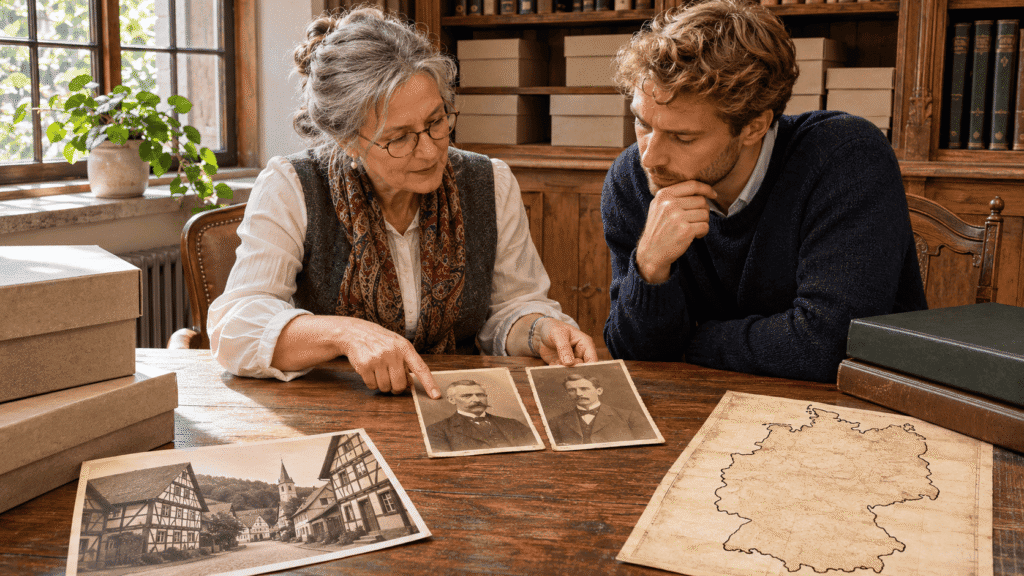
Many families start with a few names written on the back of an old photograph. Before long, that small curiosity grows into church books, handwritten certificates and records in a language most of us cannot read easily. At our site, we have worked with many readers through this stage. Most of them reach a point where the next step feels much bigger than the first.
Choosing how to handle Tracing German Family History and When to Hire a Professional Genealogist is often the hardest decision in the whole project. Some people enjoy the search and want to do every step themselves. Others hit a wall and need a researcher who knows German archives well. Several clear signs point toward outside help.
Many family trees grow well with patience, free databases and a willingness to read old handwriting. Plenty of people never need outside help at all. Expert support can save a good deal of time if it arrives at the right moment. The signs below are the ones I see most often in my own work, and I point to them one by one so you can judge your own situation.
Why German Family History Feels Different from Other Research
German genealogy follows its own rules, and many of them surprise first-time researchers. Germany was not a single country until 1871, so records were kept by many separate states, principalities, cities and churches. A family may appear in one region’s files while the next village keeps its own books. That split means you often need to know where to look before you can search.
Many researchers start with online guides before they try a local search. For a structured, beginner-friendly starting point, one useful option is a LinkedIn article about german genealogists for hire. The page describes what to think about when choosing a researcher for German work. I find it a sensible read before I reach out to anyone.
The records add another layer of difficulty. Entries are often written in German, sometimes in Latin and frequently in older handwriting that looks unfamiliar even to native speakers. Researchers often underestimate how long it takes to read a single page. A little local knowledge can speed things up a great deal, and I have seen that difference firsthand.
Understanding Church Books and Civil Registration Records
Two record types make up most German searches. Church books, known as Kirchenbücher, hold baptisms, marriages and burials for many parishes. In the 1870s, civil registration offices began to take over these tasks across the German Empire. Their entries often list parents and places of birth, which makes them a useful second source once you have a name to check.
Pastors and priests kept parish registers, and their layouts changed over the decades. Some entries are short, while others include witnesses or godparents. In my own searches, I found that a single page sometimes held three generations of names. Parish books have been microfilmed or digitized, but coverage is uneven. Some pages survive only in local archives, and a few were lost during the wars of the twentieth century.
Civil Registration and Its Limits
Records from the civil offices often give more detail than church books, including ages and occupations in many cases. Access rules differ by state, and privacy limits can apply to more recent records. Researchers usually need to show a family connection before they can view certain entries. That requirement surprises many first-time researchers, so it helps to plan the paperwork early.
Once you know which record type you need, the next challenge is reading it.
Signs Your Family Research May Need Expert Help
Most people can tell when their research has stalled, and some stalls last for months. A few signs often point toward a professional genealogist, especially after a long stretch with no progress. Those signs look different for every family, so it helps to know what to watch for.
- Records for a specific village or parish are missing from online databases and you cannot identify the right archive.
- The handwriting is hard to read and existing transcriptions seem to contradict each other.
- Family names changed spelling across generations or regions, so you cannot connect the lines.
- You need certified copies or official documents for legal or citizenship purposes.
- You have a limited time window, such as a planned trip to Germany or a paperwork deadline.
Each of these signs is a normal part of family research, and they show the next step needs local access or specialized skills. I have seen many readers reach this point after solid early work, and that effort still counts. I recommend keeping a simple log of each archive, book and year you check, which makes it easier to explain your progress to a researcher.
Handling Old Script and Language Barriers
Many older German documents use Kurrent or Sütterlin script, which looks very different from modern print. Some letters can look like other letters to untrained eyes, and abbreviations add more confusion. Learning the basics takes time, but free training resources exist for beginners. If you start with pages you already know, you can test your reading against names you trust. That small test builds confidence before you move on to harder pages.
Latin also appears often in church books from earlier centuries. Common terms for baptism, marriage and death follow predictable patterns once you learn them. A practiced researcher spots these patterns quickly, which keeps the work moving. Once a term feels familiar, the next entry usually goes faster. I find that a short glossary of these words helps readers the most.
Translation matters too. Even a correct reading can carry a meaning that depends on local customs, occupations or legal terms. Occupation titles are especially tricky, since they changed meaning from one region to another. When I am unsure, I write the word exactly as it appears and mark it for later review. Working through these terms slowly keeps the reading accurate. Good notes make it easier to revisit a term.
Archive Visits, Travel and Access Rules
Certain records can only be read at archives in person. Regional state archives, city archives and church archives each set their own opening hours, reading room rules and request procedures. Hours often shift during holiday periods, which catches many visitors by surprise. Planning ahead prevents wasted trips and missed appointments, which is worth the extra time.
Much of the work happens before you reach the reading room, and a few simple checks can save a trip. Before you arrive, check whether the archive requires a reader card or advance registration. Bring a list of names, dates and villages so your visit stays focused. Archives also often limit photography, so ask staff about current policies first. I usually send one short email to confirm details before any trip, and it saves me a lot of guessing.
Working with Remote Researchers
A local researcher can visit archives for you when travel is not practical. This suits people who live far from the regions where their ancestors lived. Clear written instructions and shared document scans help both sides stay on track. A short call at the start can also settle who does what. Good communication keeps expectations realistic about which records may or may not exist.
Choosing the Right Professional for Your Project
Each researcher works best with certain regions, languages and record types. A good fit depends on your region, your language skills and the type of records you need. Asking a few clear questions before you commit helps you compare candidates fairly, and it gives you a sense of how each person works.
- Ask which regions and archives the researcher knows well.
- Request a written outline of the proposed steps and expected timeline.
- Confirm how findings will be reported, including copies of source documents.
- Check whether the researcher reads German script and can explain uncertain readings.
Look for clear communication and realistic expectations. A researcher who explains what the records may not hold is usually easier to rely on. Written answers also give you something to refer back to if the project changes course. I keep notes on each conversation so I can compare the details later. Ask how the research fee will be calculated before any work begins. A short written agreement can also set out who pays for copies and archive fees. That gives you a clear record if questions come up during the project. Agreeing on fees early keeps the project moving.
Costs, Timelines and What to Expect From the Process
The total varies widely depending on the region, the number of records and the time needed. I keep a simple spreadsheet for these costs, so the totals are easy to check. Fees for copies and archive access are often billed separately from research hours. Some projects take a few weeks while others stretch over many months. A written estimate helps you plan without surprises. Ask for the estimate in writing so you can compare it with other offers.
Once the costs are clear, it helps to know how the work itself unfolds. Most projects start with a short review of the information you already have. The researcher then identifies likely sources, checks whether they are available and proposes a search plan. Progress updates usually arrive at set intervals, which keeps the project open and easy to follow. Keep copies of every document you receive.
Searches will sometimes hit a dead end. Some names will never lead to a record. Sometimes the answer is a gap that cannot be filled. A good report explains what was checked, what was found and what remains uncertain. I value a report that admits uncertainty, because it tells me where to look next.
Tracing German Family History and Taking the Next Step
Some people succeed with patience and free online resources alone. That path is a fine way to work. Your next step depends on noticing when your research has gone beyond what you can reach from home. Parish registers, civil records and old handwriting can each block progress. A few well-chosen hours with a researcher can make the rest of the project easier.
If you see signs such as missing local records, unreadable script or a looming deadline, consider speaking with a researcher soon. Start by writing down what you already know, including the people, dates and villages involved. Then review the questions above before you speak with anyone. A short list of this kind keeps the first conversation focused and saves time for both sides.
The reading suggested earlier can be a sensible place to start your research and to prepare focused questions. I would read it before you contact a researcher. Then gather your documents into one folder, so the next conversation starts from solid ground. Begin with one small task, such as listing every village and archive you have already searched. That list shows where the gaps are and gives any researcher a clear place to begin.